What a Sustainable Teaching Business Actually Looks Like
 Lyric Kinard


I've been thinking a lot lately about what I actually want my teaching business to look like going into the next year.
I don't know anyone in the crafts industry who hasn't been hit hard this year. We are hustling and scrambling just to stay afloat. And the business advice we keep getting tells us to have constant launches, a packed calendar, and a relentless content schedule, as if rest is a reward you have to earn first.
That isn't the life I want to live, the work I want to make, or the kind of teacher I want to be.
Sustainable is not a productivity hack. It's a decision. And sometimes it means you give something up in return. Whoever said "you can have it all" was full of it. Maybe you can. But definitely not all at once.

The Hustle Model Was Not Built for Artists
There is a version of the online teaching business that looks like this: launch constantly, post on social media every day, be everywhere, grow faster, do more. It works for some people, for a season. I've tried versions of it. I've watched other people try it. And sometimes it does work.
But this year, with so many outside forces working against us, what I've seen for so many people is exhaustion, resentment toward work they once genuinely loved, and guilt that sits under everything, a quiet voice that says you are never quite doing enough.
Here is what I think is actually happening. That model was built for people whose primary product is content. It was not built for artists, makers, quilters, and craft educators whose primary product is their skill, their expertise, and the joy of creativity they spark in their students.
We are not content creators who happen to make quilts or paint landscapes. We are artists and craft teachers who use content to help the right people find us. That is a different job. It has a different rhythm.
A sustainable online teaching business for a creative educator looks different from what the online business world usually shows us. And the difference matters.
What a Sustainable Creative Teaching Business Actually Looks Like
I want to give you some concrete images of what this can look like, because when we look at the online business gurus, I think we have all been sold a picture that doesn't match reality for most of us.
Sustainable looks like what fits your actual life as a creative individual.
For you, it might be two or three focused launches a year, not twelve. A schedule you can keep without dreading Monday. Workshops sized to be genuinely manageable, with limited enrollment so you can give each student real attention.
It might look like an email list you write to because you have something worth saying, not because the calendar says it's Tuesday. My favorite email newsletter is a photo of what the artist is working on and a link to something she found interesting that month. If she has a workshop open she includes it. That's the whole email. And I open every single one.
Sustainability means making your own art alongside running a teaching business, not instead of it, because your art is your source. When the source dries up, the teaching suffers. Rest and creative play are not luxuries. They are how you stay an artist worth learning from.
It looks like income that comes in even when you're not actively launching, because you've built enough infrastructure that your work keeps finding people while you sleep, while you travel, while you take a Tuesday afternoon off because you need it.
None of this requires a massive audience. None of it requires you to be everywhere at once. It requires a small number of things, done consistently and done well.
The Things That Make It Work
A sustainable teaching business is built on a small number of well-chosen elements.
One piece of content a month that actually matters
Not sixty social posts that disappear in 48 hours. One article, one video, one piece of real teaching that answers a real question and can be found a year from now by someone who needs it. Everything else expands from that.
An email list you treat like a relationship
Not a numbers game. A conversation with real people who invited you into their inbox. Send consistently, say something genuine, and the list keeps you present in people's minds between launches. It doesn't have to be long. It has to be real.
Two or three workshops you genuinely believe in
An entry-level course that introduces students to you. Something deeper to follow once they have a first win. A clear path from free to entry-level to advanced, where each step makes sense as the next one.
Systems for the repetitive parts
Templates for the graphics you make every month. A content workflow that produces a month of material from one core idea. An automated welcome sequence that builds relationships while you sleep. These aren't about working less. They're about protecting your creative energy for the things that actually require it.
Permission to have a quiet month
Not every month needs to be an open workshop registration month. Some months the job is to serve the students you already have, create the work that feeds your soul, and show up for your community without asking for anything in return. Those months matter.
Who This Is (and Isn't) For
If you are a creative educator, an artist, a quilter, a fiber arts teacher, a maker who has turned your skill into a teaching practice, the hustle model was not designed with you in mind. The people who succeed with that model are building media businesses. You are building something else.
You are building a reputation, a body of work, and a community of students who learn from you specifically because of your perspective, your craft, your way of seeing. That is slower to build than a viral following. It is also far more durable.
A student who found you through a single well-made YouTube video and learned something real is more likely to become a paying student than someone who saw thirty of your Reels. Because trust takes time, and depth builds trust faster than volume.
What I'm Moving Toward
I want to be honest about where I'm headed with the Academy for Virtual Teaching, not as a sales pitch, but because I think it's relevant to this conversation.
I'm slowing down the pace of launches. The Virtual Teaching Business Builder won't open again until the end of January. I'm putting more energy into the community we already have rather than chasing cold audiences who don't know me yet.
And in January, I'm opening something new: a paid membership tier for the people who want to go deeper with AVT. Not a course. A community, with access, with ongoing support, with the kind of conversation that doesn't fit in a free space. It's sustainable for me. And I think it will be a lot more valuable for the people who are ready for it.
I'll share more details as January gets closer. If you've been part of the free AVT community and found it valuable, this is the next level of that.
The Question Worth Sitting With
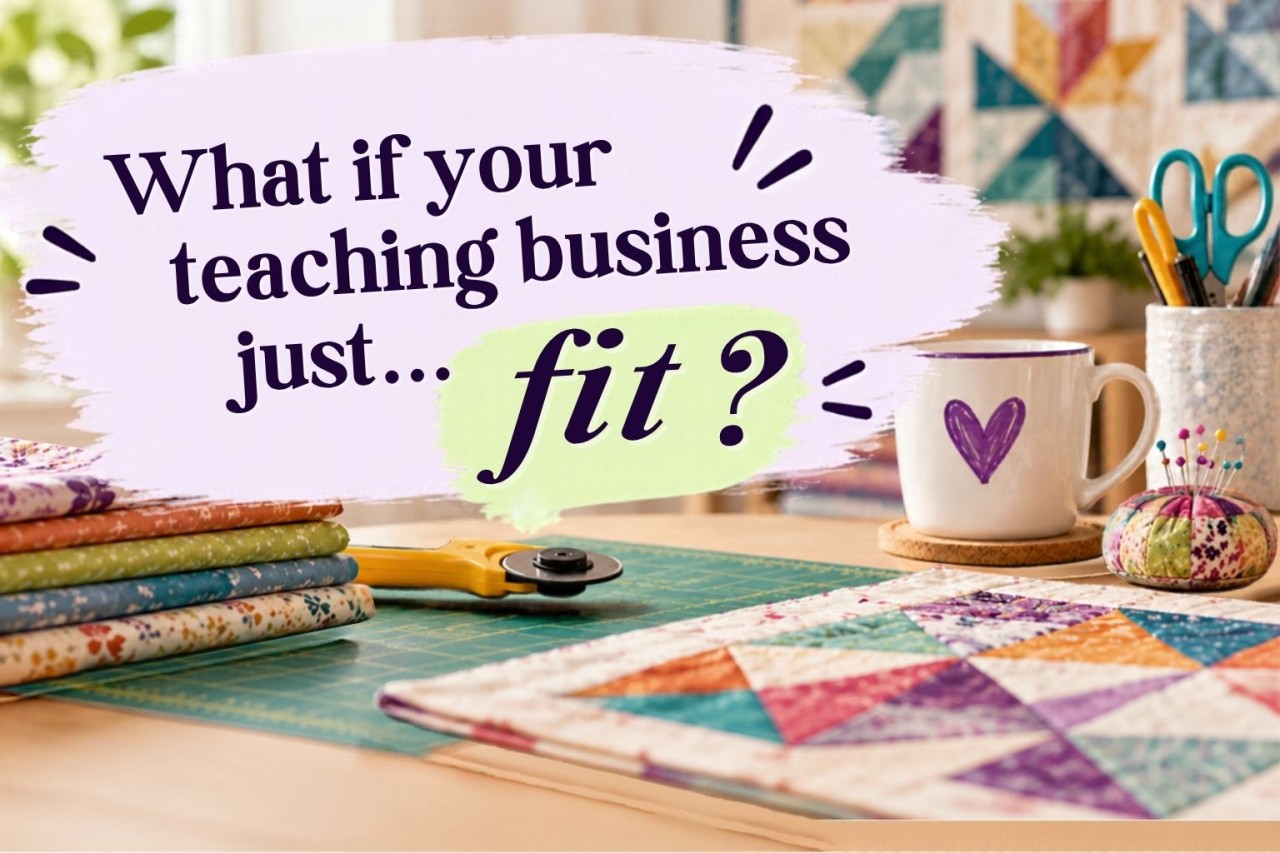
What would your teaching business look like if you designed it around the life you actually want, rather than the version of success you've been told to chase?
Not bigger. Not faster. Not more.
What would it look like if it just fit?
That's the question I'm sitting with this season. I'd love to know where you land on it. Drop it in the comments below. This is exactly the kind of conversation I want to be having right now.
Frequently Asked Questions
Is a sustainable teaching business less profitable than a hustle-based one? Not necessarily, and often the opposite is true over time. A business built on a manageable launch schedule, a real email relationship, and workshops you can deliver well tends to have better student retention, more repeat buyers, and lower burnout-related dropout from the teacher's side. Revenue built on a foundation you can sustain tends to compound rather than collapse.
How many workshops or courses do I actually need? For most creative educators, two or three is genuinely enough, especially in the beginning. An entry-level offer that introduces students to you, something deeper for the people who want more, and a path between them. You don't need a full curriculum. You need a clear next step.
What's the minimum viable email list for a sustainable teaching business? There isn't a number that matters more than the quality of the relationship. Teachers with 300 engaged subscribers regularly fill workshops. Teachers with 10,000 disengaged ones often don't. The work is building a list of people who open your emails and trust you, not a list that looks impressive on a dashboard.
Do I need to be on social media to build a sustainable creative teaching business? Social media can help people find you, but it is not the foundation of a sustainable teaching business. Email is. A video library on YouTube is. Content that exists beyond its original 48-hour window and keeps working for you is. Social media is useful for discovery. It is not where relationships live.
How do I know if my teaching business is sustainable? Ask yourself: could you keep doing this for the next three years at this same pace? If the answer is no, something needs to change. A sustainable business is one where the pace of work, the volume of output, and the emotional demands of serving students all fit within a life you actually want to be living.
The Academy for Virtual Teaching supports artists and craft educators who are building sustainable online teaching businesses. The free AVT community is open now. A paid membership tier opens in January 2027.
Learn more about the Video Making Crash Course
Categories: : Monthly Theme