How Lisa Woolfork Built a Creative Business with Podcasting and Patreon
 Haley Hatcher
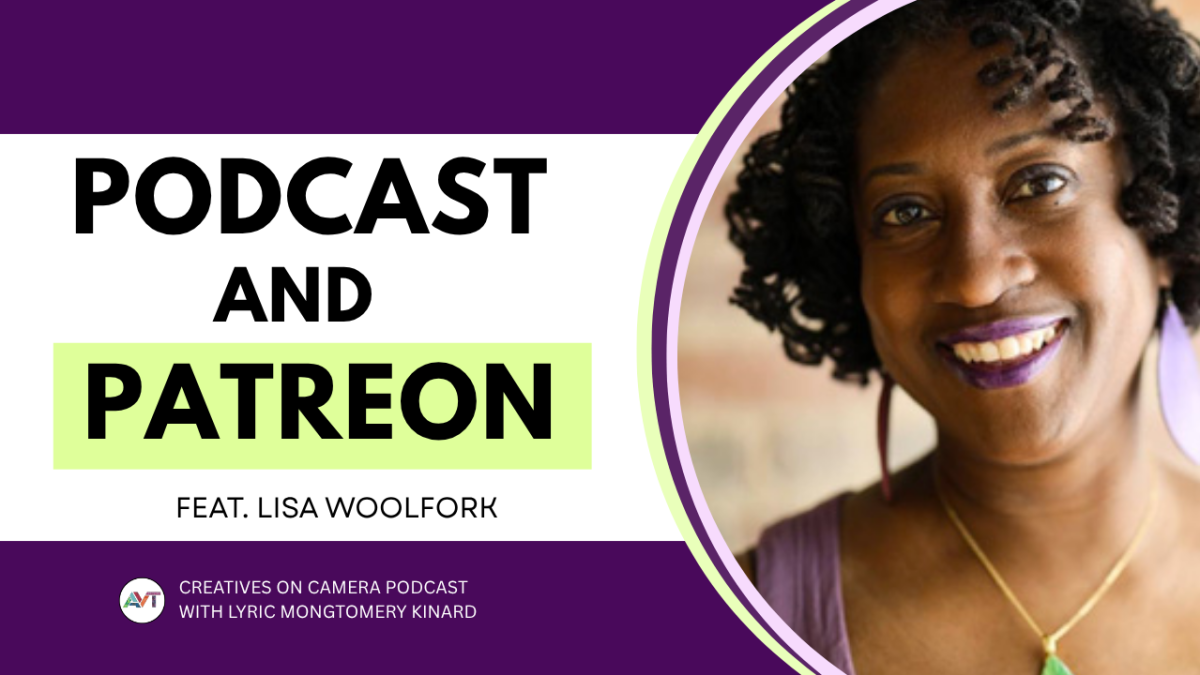
This episode brings back the radiant and powerful Lisa Woolfork, founder of Black Women Stitch and host of Stitch Please Podcast.
In episode 48 of Creatives on Camera, Lyric Kinard welcomes back Lisa Woolfork, founder of Black Women Stitch and host of the Stitch Please podcast, for a deep dive into the how behind her business.
Lisa shares how she built a mission-driven creative enterprise centered on podcasting, Patreon, and community support—without traditional courses, workshops, or product-based sales. Together, Lyric and Lisa explore Patreon as a sustainable revenue model, how creators can grow from low-tech beginnings to more advanced setups, and why community-funded work allows artists to create without burnout.
This conversation covers social entrepreneurship, boundaries, creative labor, accessible tech, podcasting workflows, Patreon tiers, and why businesses should nourish the people who run them. If you’re a creative educator, podcaster, or artist looking for alternatives to hustle culture, this episode offers both inspiration and practical insight.
02:30 Black Women Stitch as social entrepreneurship
04:30 Podcasting as the core content engine
06:30 Mission-driven structure and nonprofit mindset
08:30 What Patreon is and how it works
11:00 Patreon as community-supported creativity
13:30 Boundaries, burnout, and sustainable work
16:30 The 10% of work that actually matters
18:45 Touring the Black Women Stitch Patreon
24:00 Why Patreon is the most consistent revenue stream
26:30 Starting with a phone: accessible tech
32:00 Boom arms, mounts, and filming overhead
35:00 Storage, workflows, and naming files
38:00 Gimbals, stabilization, and accessibility
42:00 Learning tech one step at a time
Connect with Lisa:
Instagram: @blackwomenstitch
Episode Resources:
- Inside the Black Women Stitch with Lisa Woolfork - Part 1 with Lisa
- Patreon Platform
- Quips - A New Patreon Feature
- Patreon - Live Set Up and Overview
- SmallRig - Camera Rigs, Tripods, Lighting, Accessories
- CapCut - All-in-One Video Editor
- B & H - Photo, Video, Audio
- St. Louis City Museum
- DJI Osmo Pocket 3 Gimbal (B & H)
- DJI Osmo Pocket 3 Gimbal (Amazon)
- Video Making Crash Course - Academy for Virtual Teaching
Let's Connect!
Register for the FREE webinar: Make an Effective Promotional Video in 3 Easy Steps! You will learn how to get conversions with authentic connections instead of pushy sales! 3 Steps Promotional Video Free Workshop
About Lisa:
Practicing the unlikely but not unprecedented mix of needle arts and Black liberation, Lisa Woolfork sewing and quilting practice operates alongside her scholarly work as an Associate Professor of English at the University of Virginia. Woolfork is an academic, sewist, community organizer, and podcaster. She is the founder of Black Women Stitch, the sewing group where Black Lives Matter. She is also the host/producer of Stitch Please, a weekly audio podcast that centers Black women, girls, and femmes in sewing. In the summer of 2017, she organized in community to protest the white supremacist insurgency in her city Charlottesville, VA. She resisted in a variety of ways including nonviolent direct action, working with a bail fund for activists, sewing for a creative arts team, and participating in, and later co-founding, CARML, an antiracist media collective. Her essay “‘This Class of Persons:’ When UVA’s White Supremacist Past Meets Its Future” was published in a collection of essays about the terror events in Charlottesville. She has spoken about the connections between Black liberation and craft for the Smithsonian’s African American Craft Summit, the Modern Quilt Guild, the Center for Craft, and more. She is currently writing Black Women Stitch Liberation, a book that addresses the connections between Black women’s creativity, autonomy, and community.
Listen In:
Listen on Apple Podcasts or Spotify
Click here to read a raw transcript of this episode
Lyric Kinard (00:01.55) Hello friends, we are back. We are back today with Lisa Woolfork and I am so happy that we get chance number two to really dig into some of your business and more of the how and the what that's going on with you. Lisa, say hello again. Lisa Woolfork (00:16.106) Yes. Lisa Woolfork (00:23.39) Hello again. Hi, this is Lisa from Black Women Stitch and the Stitch Please podcast, and I am so happy to be here again, Lyric. Thank you so much. The only thing that you can beat talking to Lyric once is talking to Lyric twice. So this is a real treat, so thank you. Mutual admiration society. Lyric Kinard (00:36.298) Likewise. Yeah, we're both just fangirling here. It absolutely is. So last time we talked a lot about your journey into where you are now with Black Woman Stitch, with your podcast, with your Patreon, with the community that you've built and why and how you got to this place. So friends, if you haven't listened to that episode, please, please go back and listen to it. It's really important. It's informative. Lisa Woolfork (00:57.525) Yes. Lyric Kinard (01:09.986) and it will touch your soul. Today, we're going to move into more of, you know, a lot of what we usually do. We love the getting behind the scenes and how the sausage is made and just the nitty gritty of how businesses work. So I can't wait to dive into that with you because you, you don't have like big workshops on an online course platform. Your business model is different. And I think we can all really, really learn from that. And also, I'm talking a lot right now, but let's just forecast where we're going, which means you have to remember, because I won't remember where we're going. Also, Lisa, you are more in the high tech end. Lisa Woolfork (01:56.8) Okay, I got you. Lyric Kinard (02:04.946) Usually the people who come to us, I bring them into the very lowest, easiest entry level for getting in front of your people and sharing your creativity with people online. Well, you've been there and you've grown from there. So I wanna give people a view of where you can go if and when you feel like that's where you wanna go. So let's start with the basic structure. Tell us. Lisa Woolfork (02:12.778) Yes. Lisa Woolfork (02:19.456) Yes, yes. Lyric Kinard (02:33.496) Give us the outline structure of your business and it's not your typical business business. Lisa Woolfork (02:39.678) Yes, yes. I see this as more of a social entrepreneurship project. That's how some folks, I think, might see it, because we are very much mission-driven. We're more of an arts-cultural project. I think if I were to put this in certain—in a business frame, not so much about retail or sales, as much as it is about curating experiences, gathering and archiving history and creating an environment where we can see black creativity flourish and celebrate. So because of the mission, it helped me to create a structure that felt very organic to that particular work. So as my priorities grew or expanded, I'm not gonna say that they changed. Like the basic priority has always been to center and celebrate black women, girls and femmes in sewing. That has been the basic priority. Lisa Woolfork (03:38.283) but as we are expanding to more needle arts. So sewing is also quilting, but also needle and thread is something that, you know, knitters and tatters and embroidery, like so many other different disciplines within the needle arts. It gave me the opportunity to think about what kind of resources did I want to provide and what method and mode of messaging could help disseminate the energy behind the project. And so, as I started to think about different blocks, the main block, the main content block being the podcast, and the podcast being a really great engine in a lot of ways behind what Black Women's Stitch is doing. We have been going, the show has been going for five years. Lisa Woolfork (04:37.12) Well, almost six years now, actually. We started in 2019, and here we are in this year, 2025. So that's six years, actually. And it was and remains a very much grassroots effort. It remains independently operated and funded. There are no large sponsors behind the project. This is not a project that's being done for someone else. It is very much community driven and I do what I can to always look outward to see who's doing what, how do we find some, this is a really exciting project. Let's make sure that we get this in the schedule this quarter. So it's a combination of a media project and all of the things that go with podcasting as a media, as well as a cultural slash social project by to put together and to create a huge archive of creativity that people can go back and look at interviews, go back and look at some of the solo episodes, as well as learn some of the basics about sewing. So it provides a lot of information. And the model that I've been trying to use is a nonprofit model. And that has helped me build partnerships with local community organizations here in my community, and they have been the ones to kind of help me drive the business side forward. Lyric Kinard (06:14.786) Right. And this is a perfect case study of knowing deeply why you are doing this, knowing your core values, understanding your big why that you do the whole thing and how that drives the actual structure that you build around how you serve your community. You know your people, you know what you want to provide and how you can serve them. Lyric Kinard (06:44.022) and then the structure that is built up to deliver, you know, the vehicle y'all hop in and turn on the gas and go with is dictated by being in alignment with your reasoning and your purpose. So you have the podcast and now you are building or already have built community on Patreon, which not a lot of Lisa Woolfork (07:04.862) Yes. Lyric Kinard (07:13.374) online creatives. Well, actually there are a lot of online creatives, but when you're just getting into this and thinking I want to serve, I'm an artist, I'm a crafter, and I want to reach people online, Patreon isn't always the first thing you think of as community, and a lot of us really don't know how it works. So would you describe that business structure, software platform, what it is? Lisa Woolfork (07:41.662) Yes, absolutely. So, Patreon is a platform that connects, I think it's designed to connect artists or creators with their community. That Patreon as a revenue generating system for artists that allows people to individually support creators. I think the name Patreon goes back to the old school, very old Lyric Kinard (07:42.444) what it does and how do you use it. Lisa Woolfork (08:11.081) 13th century, 14th century patrons of the arts, where you had very wealthy people who would provide financial support to artists. Either they would have a family artist that they worked with and painted their whole family, or they provided, you know, one-offs for, here's a portrait, we'll pay for this, or we'll pay for the art, or, you know, whatever, just to kind of help get them started. Lyric Kinard (08:12.815) Patrons of the arts. Lisa Woolfork (08:38.503) And I think Patreon is designed to be a modern version of that. There are lots of different creators on the Patreon platform. There's artists, illustrators, comics, doctors, therapists, anyone who is creating anything for the benefit of a community or the benefit of just to create art because you love it. People who want to get in touch with you can find you through Patreon. And it gives this opportunity for revenue and compensation from the people who value and appreciate what you are doing. So it really is about relationship, and it's about whatever assets or resources you want to share in community. Lyric Kinard (09:35.524) Right, so often a teacher per se or a shop will have a product and you create the product and then you find a way to deliver that to people and Patreon kind of flips the model. It's like bring the people to me, help you let the patrons help the artist with financial support. You can subscribe at different levels on Patreon and then the artist chooses often. Lisa Woolfork (09:47.973) Exactly. Yes. Lyric Kinard (10:04.941) it's the artist in control. And they're free to create what they will because they have people that believe in them before they even start. Lisa Woolfork (10:15.911) Yes, absolutely. And that type of energetic reinforcement makes it a really beautiful platform from which to launch. Because you feel as though the people that are in your Patreon are those who are truly committed and believe in what you're doing. They make for a really wonderful test audience or community. If you want to try something out, like, hey, What do you think? Do you think this one or this one? Oh, I like this one. Well, what about, okay, so I'm working on something. What do you think about this particular thing? And people can offer feedback. I like the Patreon platform because it does give people an opportunity to directly and on a recurring level support creators. We have had a Patreon for maybe about three or four years, and it was just there kind of sitting in the background. And now I've started to really step forward with it. One of the things for the podcast, it is an audio show first. It is an audio podcast. However, whenever I have a video interview, like what we're doing right now, those video interviews go to the Patreon. So there is a huge archive in the Black Woman Stitch Patreon of a lot of video episodes and conversations. that are only audio available on the podcast, but the Patreon peeps, get additional benefit. They get, you know, they can also like very easily contact me and send a message and you know, I respond to those really quickly. There's also a new element that Patreon is working on. They are really trying to bring more free users to the platform. And at first I thought, well, why do you want all the free users? But that is another way to just get people who might not be in your audience to discover you. So they've been doing this different discoverability elements. And so they have a new one now called Quips, where you can record a very short little flash audio video message. Lisa Woolfork (12:35.517) to the entire Patreon landscape. And there's folks who have found me that way, you know? I posted a little video of me going on a covered wooden bridge, which I had never been on before. I'd never seen one in real life to drive on. I've just seen those—I've just seen them on postcards. You know? Yeah, storybooks and postcards. So I made a little video, and I was like, isn't this amazing? Lyric Kinard (12:53.679) I don't think I have either. Just in storybooks, right? Lisa Woolfork (13:02.431) And people were like, I didn't even think that that was that special. You know, we have those everywhere around here. So, just making these little kind of connections can be an easy way that I think in some ways community is meant to be. And I think the work that as I try to do it, and I don't always succeed, but I want it to have some ease. And I don't mean it should be easy as in as in frictionless, you know, I mean, it's always working. Lyric Kinard (13:33.323) No, there's always work involved, but you need to be supported as you work so that you're not being drained. Your business should feed you, not completely drain you. Lisa Woolfork (13:41.383) Yes, yes, exactly. And like they say, if you love what you do, you'll never work a day in your life. It is that type of, you're not being exploited. You're not being overworked. You're not, you know, now I think that for myself, I can definitely say I am a very bad boss to myself. I will work myself to exhaustion regularly. That is not, I am not proud of it. Lisa Woolfork (14:10.734) I do not consider that a flex. I consider that something to absolutely work on and repair. Lyric Kinard (14:15.855) Absolutely. My business coach just told me that for 2026 you are putting boundaries around your business. Your business is not you. You do not work on it 18 hours a day. Yeah, wait, what? Lisa Woolfork (14:30.002) the day. Wow. Cause I, what do you mean you don't work on it 18 hours a day? What do you, what? Yeah. So I'm always working at all times. I mean, you know what? Just, I was planning, my family were going to get together and go to this, this steak house in Brooklyn. and we were planning to go to this and I was like, wait, a steak house in Brooklyn. Who else in Brooklyn might I know so I could set up some interviews while I'm there and, and maybe, isn't that, that is, that, is not okay. That is not, I'm going to be there. Let me see what other kind of work I might add. I could go to some places and do some videos. Let me bring, should I bring both microphones or just one? Lyric Kinard (15:01.859) With your family, with your family, Lisa, stop. But yes, I do the exact same thing. Lyric Kinard (15:21.199) Yes, I understand this completely because same, but it's not healthy. That's why Patreon can provide you some of that. You know you have supporters here on a regular basis, so you don't have to hustle 24 seven. So your business can support you and lift you as you lift your community. Lyric Kinard (15:47.688) That balance is hard to find, but it's something we should actively seek. Lisa Woolfork (15:53.713) Absolutely. And it is a practice. And it is a practice. you know, I often have to, like, stop myself and just pause and say, OK, this is not an emergency. This is not urgent. Everything will not fall apart if this one single thing doesn't go the way you think it should. And that there's a lot of power in releasing. You know, so I love the boundaries that you're going to be working on for 2026 for sure. And I think, well, it's going to work. You're going to, it's going to work because you're going to work it. It's going to work. It's just a matter of deciding and trusting. You know, I think when you, when you have worry, you can fill it with work. Lyric Kinard (16:28.352) We'll see if they work. It's gonna work. I'm gonna make it work. Lisa Woolfork (16:49.298) But that doesn't necessarily mean that the outcome will be any different or any better had you just left it alone and see what happens, you know? Lyric Kinard (16:57.936) Right. coming down to often there's like 10 % of the time we spend and the work we do in our business is what actually brings in the vast majority of our return. You know, whether that's in community connection or income or all of that things. And it's really hard sometimes to figure out what that valuable 10 % is and it's Lyric Kinard (17:27.372) even harder to give up so much of the other stuff. We're like, well, it would be better if I did this, or I could add this one more thing if I did this one more thing. Is it necessary? Lisa Woolfork (17:38.173) Yes. Yes. Yes. Is it necessary? And what is it going to give you? if you have exactly, exactly like what are you? I think that if we prioritize, I really love the organic nature that you describe about the nature of this work, that what we're doing is Lyric Kinard (17:48.482) or what is it going to cost you? Lisa Woolfork (18:06.302) It's creative labor. It is labor and it is creative. We are exercising our creativity. We are inviting others to join us to exercise their creativity. And when I think about it that way, when I think that we do have the capacity, we know how to make new things. We make them all the time. We take raw material, thread, yarn, fabric. Lisa Woolfork (18:35.664) and transform it into something it has not been before. Lyric Kinard (18:39.92) And it's beautiful and it adds something joyous and good into this world. Lisa Woolfork (18:46.822) Yes, and if we can take some of that same creative energy and turn it inward to our own businesses, our own practices, our own creative enterprises, I think that we will feel more whole and the businesses that we're working on themselves will be more strong. Lyric Kinard (19:08.068) I think they will. Lisa, let's go. If somebody had never heard of Patreon before, why don't you walk them through what will they see when they come to Black Women's Stitch's Patreon? are there levels? Do you subscriptions? mean, tell us exactly. Take us on a journey through your business. Lisa Woolfork (19:25.106) Yes, absolutely. A journey through the Black Women's Stitch Patreon. Fantastic. The Black Women's Stitch Patreon is a wonderful mix of the episodes that we've done, different projects that I might be involved in. And what we examine are, you I have like, I have, we start with, if we, you can start with actually the library. If you start with the library, it's going to give you so many different things that we have coming up and things that we've done. Lyric Kinard (20:08.132) and they have to subscribe to have access to these things. Lisa Woolfork (20:11.471) Yes. there are, I'm trying to think about the tiers right now to make sure. So there is a, people can join for free and you can just, you know, watch and there's certain things that happen with the free memberships. I often, like if I do a live video, that's something that everyone can kind of see, for example, but they get saved for the Patreon people to go back and look later. So we're working with three tiers right now or four tiers. We've got Lisa Woolfork (20:39.613) which is the basic level tier. And if you do that one, you get videos of the podcast episodes, get swatch cards. There is a, so, that, and that means that's how you get like all of the different video assets for the podcast. So if you're interested in episodes that I've done and you have that basic tier, you are absolutely going to get all of those episodes that happen to be there. Then as we start to advance, Lisa Woolfork (21:07.675) you know, there's more things. Starting in 2026, we're gonna be having more meetups, like a once a month kind of stitch up type thing. We also have some of the higher tiers that include office hours, telephone hours, messaging, you know, so like people can send a direct text message, video calls, like all of these things that I'm trying to kind of offer in a way that gives people access to the resources that Black Women's Stitch has out there in the world and in the Patreon, and then the ability to kind of contact me, to ask questions or concerns or something like that. That that tier was designed for showing a video and saying, hey, I'm working on this, can you give me some advice? And I could look at that and give comments back. Lisa Woolfork (22:02.749) And so that's another element. And the way that Patreon, because of the tier structure, you you set that. You can decide what your tiers are. Do you have four? Do you have five? What different assets do you want to kind of build up over, you know, as people are joining in the community? You can decide. I think I kind of message people maybe. maybe three or four times a month, like, you know, here's something that's happening, or here's a place that I went, or here's the pictures from this exhibit, you know, just as a way to kind of, you know, it's very much touch points, yes, touch points to keep people connected and for folks to kind of know what's going on. And for me, too, it's fun for me to be able to say, hey, I went to this place and... Lyric Kinard (22:40.688) Touchpoints to keep. Lisa Woolfork (22:55.097) you should try it or what do you think? Should I use this one or this one? Which one should I do? You know, that type of thing. And I also know as someone who supports a lot of other Patreon creators as well, I'm also on the community side as somebody who. Lisa Woolfork (23:10.639) also is a patron of other creatives. So I get to see what other people are doing. And it's really nice to get email inbox notices, they're having this, or they're doing that, or this is an opportunity to check in or to touch in. So Patreon has been actually really wonderful for that. And in fact, I think Patreon has been the most reliable and consistent revenue stream that we have had. So, we have the Patreon as, like, as a foundation, and we'll do other fundraising drives. We'll do—we apply for grants all the time. So, we do get those other funding. And we're also looking at sponsorships and ad sales and those kinds of things. And so, those are all an element in the kind of funding ecosystem that we are establishing for the organization. But the Patreon has been the most consistent. Lisa Woolfork (24:06.917) It's been there since the very earliest days of the podcast, and it has grown over the years. And, yeah. Lyric Kinard (24:16.849) So it has mechanisms built into the platform for you to communicate with your people, to have tiered levels of access to different parts of whatever space you build in their libraries, which I'm assuming you could add in something that looks like a workshop if you wanted to. Lisa Woolfork (24:29.65) That's right. Yeah. Lisa Woolfork (24:38.939) Yes, absolutely. So they also have newer features that they're updating. In addition to like the quips, they also have made it easier to do live videos directly from the platform. So you can go directly into Patreon, press a button that says live, and they will send a note to all your free and paid subscribers that you are live. And so... Lyric Kinard (25:03.793) Okay, nice. Lisa Woolfork (25:05.221) That's it. And you can also upload videos directly to the Patreon platform. So rather than uploading them into YouTube and then sharing the link, which is what I've done as well, you can also have them be directly in the platform. Yes, so they exactly they host the data for you. And what I like about it is the fact that it's in the platform. Lyric Kinard (25:21.969) so they can host the data for you. Lisa Woolfork (25:31.129) it's kind of, keeps it within the platform. think sometimes if you have like a YouTube link and people are sharing that out beyond the platform, this doesn't, you can't really do that with this because it only lives. Lyric Kinard (25:43.154) it's a stronger gatekeeping for access, right? And there are advantages to that. And also sometimes this, so this is a complete aside, but I guess it would depend on what analytics and everything they have for the videos. a lot of, one of the experts I've been talking to is saying, you know, it's not a bad idea to. Lyric Kinard (26:10.011) post your stuff to YouTube and have it unlisted and then just embed it in your course platform if your course platform doesn't have the deep analytics. Because on YouTube, you can look behind there and see exactly how many people watched, where they dropped off and all that stuff. But if you don't need that, I mean, on Patreon, you've got people already paying. Lisa Woolfork (26:22.789) that's right. That's true. And for how long? Yes. Right, and- Lisa Woolfork (26:34.138) Yes. Yes. And it's interesting because if I'm doing something on Patreon, I feel much more free to talk about like the brands, the, you know, the, the, the exact pattern, the information, because I feel like I'm not like accidentally endorsing someone. You know what I mean? and so yes. And so it feels like, you know, everyone there is paying for this information. Lyric Kinard (26:53.361) Yeah, it's a closed ecosystem. Lisa Woolfork (27:04.056) So it feels more like, sure, I'll say, okay, this is the pattern number I used. This is the exact place I got the fabric from. Because again, unless I'm working with a brand, why would I give them free advertising? You know what I mean? So I'm trying to be a bit better about that. Lyric Kinard (27:21.221) Right. Excellent. Let's go into where you started. Let's get kind of granular down into tech stuff. Yes, let's show us where you tell us how and where you started. Lisa Woolfork (27:31.581) The techies, the techies, yes, yes. It doesn't hurt that I started with my phone like many people do and I think it's these phones can do every year they do more and more. The cameras get better and better. Very much adequate and you know some of the phones cost as much as a camera, know, if you're buying like and so. Lyric Kinard (27:48.497) They're perfectly adequate. Lyric Kinard (27:56.316) So, yes. Lisa Woolfork (27:58.959) I started with my phone and I would get the best phone that I could afford, one that had a lot of storage, one that had a good camera. And I learned that from other creators who were also using their phones. Like, this is one of the ways that creativity or this type of video teaching that you're offering can become more democratized, that you don't have to have a reflecting glass camera, whatever, you know, whatever the fancy, fancy types are. Lyric Kinard (28:27.341) None of the professional tele equipment is necessary. This is so accessible to anybody with a phone in their pocket. Lisa Woolfork (28:37.56) And it's in that, it's, which is funny, cause that's true of podcasting as well. Podcasting is also a very accessible, easy to kind of get started with. And I started with my phone for my podcast. I started with zoom. that was how I was doing the recordings. I started with, with zoom and then I switched to different platforms and I started, I got an audio interface. Lisa Woolfork (29:06.512) which is what you use to kind of connect your microphone and sound to the computer. So I started very low tech there and I'm still using, I'm pretty much still using some of the same low tech things for my podcast or low tech. And it sounds great and it's good quality. The sound is good. So that's just one step in terms of the tech, the tech journey for the audio and for the video, it was very much the phone. I Lisa Woolfork (29:35.078) For years, I did a weekly live on Instagram that I live streamed just from my phone. It was like every Thursday at three o'clock and I would do like a studio tour or I would do a different component of, you know, how to get the pattern back in the envelope or just asking, you know, answering all of these different questions. And from there, it just kept growing and growing and Lisa Woolfork (30:00.589) It wasn't until very recently, so I started to add additional cameras to what I was doing. So I got a GoPro because I thought that would be good for closeups and stuff. And I don't really use the GoPro as much, but I do have it. And so I started to do multi-camera angles when I've been recording videos, like what you can see if you sign up for the Patreon and I got a great campaign to tell you about in a second. but I went from the phone to the GoPro and that's a big learning curve. I think when you're so used to using your phone, you don't think about having an SD card to get all of the footage in a camera. Lyric Kinard (30:45.339) There's a lot of in-betweens. You either have to have all kinds of equipment adapters to send it straight to your desktop, or you have to record and then there are extra steps in between. That SD card. We were talking earlier about how I have a fancy camera that I took on a whole trip just for this and didn't bring SD cards. Lisa Woolfork (31:10.937) I just bought an SD card case because I couldn't figure out where to put the little things. They are so tiny. They are, they are miraculous. They are exactly miraculous. They are so small or like you put it down somewhere and it's like, well, I'm never going to see this again. so that's why I bought, I bought a case, a little tiny case just to pop them in and, Lyric Kinard (31:15.782) And they're so tiny. They're miraculous technology.But also that means you forget to bring them. Lisa Woolfork (31:39.356) And I also got an adapter that I could use. And let's see if I can grab it real quick. Hold on. Because, and the reason I mentioned this is because I just wanted to show folks that it's doable. It's absolutely doable. No one is being asked to reinvent the wheel, to get a whole new education and a whole new degree in videography. Like that is not necessary. You just need a few little tools. I'm gonna go grab this. It's right here. Lisa Woolfork (32:25.669) So this little guy, because I work with, I have, I use a Mac, a Macbook. That's what I use for my work and computer and everything. Lyric Kinard (32:33.104) Lisa is holding up an adapter cable. So it's got lightning on one end and then on the other side, I have one of those that has all different kind of card readers, USB and HDMI and SD card and micro SD card. Yes, this one has very, so this is the micro SD card and I'm holding it y'all. It's about the size of a thumbnail. Like, you, this is my thumbnail is bigger than this card. And I took, I put it in this little slot and then I have my external drive, which is a terabyte of a drive. And I just put them next to each other. And what was helpful, Lisa Woolfork (33:16.183) in having this was I could transfer the footage from the camera right into the hard drive and bypass my computer's hard drive because it gets so full. You know, these are part of the learning curve, as you were saying. So I went from a camera, I went from a phone to a camera. But as I was using my phone, I was using all of the camera gear. Lisa Woolfork (33:42.616) So by that I mean I was using boom arms, which I installed on my cutting table. At each corner there is a C clamp. Something to... Yes. Yes. And that's, it's the same one that's on this microphone. I'm showing my microphone a little bit more deeply and I'm pointing to this arm. Lyric Kinard (33:54.621) Yeah, something to hold your phone, an arm that you can adjust and have. It holds your phone and have an overhead camera. Lisa Woolfork (34:10.425) And I've got about four of these, and I've got all over the place. And the top of them can, the top of, exactly, yes, exactly, exactly. And you can, I put my. Lyric Kinard (34:18.938) I was just looking at mine as well. See if we have the same thing. This is just for my microphone though, this big honking thing. Lisa Woolfork (34:28.475) This one, I have them for, I've got two 48, I got a 48 inch, I've got a 24, and then I also have, there's a company you all might wanna look into, it's called SmallRig, and they've got all manner of photo accessories, which can be adapted for your phone. So SmallRig is really great. I think they're known as a camera accessory company, but they also, the, Lyric Kinard (34:47.91) I'm writing it down. Lisa Woolfork (34:56.345) the adapting, the little heads. So this is a battery for the camera that I've been using lately. And you see that little circle hole. That's exactly it's universal. It's like a universal thing. this, this will, this attaches to my boom arm, but I also have one for the phone. So even before I got the camera, I was doing overhead shots with my phone. was doing closeups. Lyric Kinard (35:02.652) Right. Yeah, it's a quarter inch thread, regular camera mount. Lyric Kinard (35:22.492) Mm-hmm. Lisa Woolfork (35:24.571) where I would have the phone really close to the sewing machine needle to show how to do this particular technique. And we can keep that going with the cameras. Lyric Kinard (35:30.525) Right. Right. So even if you just start with your phone, everybody is going to need one piece of equipment, which is something to hold the phone. And that piece of equipment depends on what it is that you're specifically showing. And the boom arms are ultimately adjustable. You can, if it's big enough, it can go from the side of your table up and over your shoulder and get down under the harp of the sewing machine. So you can see Lisa Woolfork (35:37.146) Yes. Lisa Woolfork (35:42.586) Yes. Lisa Woolfork (35:58.565) Yes. Lyric Kinard (36:00.242) So yeah, this is our jam over at the Academy. All the fun techie equipment. Lisa Woolfork (36:04.602) It's so much fun. It's so much fun. like, you get also like, you know, subscribing to newsletters like B&H Photo and other places, they'll have sales, they'll have bonuses. They often have tutorials and demonstrations for how to use some of the things. So. Lyric Kinard (36:17.106) absolutely. They're fantastic. Lyric Kinard (36:29.52) Right, if you're in the United States, B&H Photo is one of the best techie camera photo equipment kind of places. And you can find all the same stuff on Amazon, my friends, but supporting, they're a family-owned business. They are fantastic people. And, you know, it's rarely more expensive than on Amazon. you know. Lisa Woolfork (36:44.633) Yes. Lisa Woolfork (36:57.86) And I've been to this shop in New York. I went, they have a, they have a couple of brick and mortar shops in New York city. And I've been to one of those. And when I tell you they have a shoot system that runs on the ceiling of the store. So no, for real. So some, yes, yes. So like, Lyric Kinard (36:58.674) Here we go, let's just go, go small if you can. Lyric Kinard (37:07.934) nice. Lyric Kinard (37:20.818) Yeah, so they can deliver stuff, right? I'm laughing because this is a complete squirrel. If you ever go to St. Louis, Missouri, go to the City Museum, which used to be a 10-story shoe factory, and they have circular shoots that go from the top where they used to deliver shoes, but now there's slides. Like you could go down a 10-story curly slide. Lisa Woolfork (37:41.092) shoes. Lisa Woolfork (37:45.316) Person Lyric Kinard (37:47.187) for people. Yes, they've converted the entire 10 story building into the most phenomenal, fun music. Don't take your kids. Well, it's crawling with kids, but you'll lose them because the whole place like it has holes in the floor that you can go downstairs, you know, just like, they'll just, but my gosh, we had so much fun. Lisa Woolfork (37:57.263) Don't take your kids. Yes, I def- Lisa Woolfork (38:04.791) my gosh! gosh. Lyric Kinard (38:12.242) I went down a 10 story curly slide and then I couldn't stand up. Squirrel, okay, let's get back on track. It was so much fun. Well, most of the time you go really slow. You're not supposed to pick up your feet and you kind of have to scoot yourself down, but I didn't follow the rules. Lisa Woolfork (38:18.234) That sounds so terrifying. That sounds incredibly scary to me. Ten story curly slide. No thank you. Lisa Woolfork (38:33.636) I mean, I would just want to get down as quickly and on my butt as possible. That is what Lyric Kinard (38:39.046) The whole thing's created by an artist. So it's a phenomenal experience for all of you creative people. Yes, go back to B &H Photo. Sorry about that. Lisa Woolfork (38:41.53) It's an immersive experience. Lisa Woolfork (38:51.182) B &H Photo, I say that just because you'll get information and notifications for different sales and things like that. And it's a nice way to stay kind of current on, you know, they just came up with a new one of these, or here's a different version, or the one that you... Lyric Kinard (38:58.308) Mm-hmm. Lyric Kinard (39:04.604) Right. And if you get to the store, they won't send you down the slide, but they will shoot, they will send equipment down the chute. Lisa Woolfork (39:10.516) No, send the, yeah, the shoots go to the cashiers. So you order something. So you're talking to someone in the department, you say, I want so and so. And they say, okay. And then they signal somebody and then it goes through the shoot system and you go to the register and there's your thing. It was very fun to watch. But no, I really feel as though my transition from, excuse me, from an iPhone, which is what I've been using, Lyric Kinard (39:39.687) Mm-hmm. Lisa Woolfork (39:40.175) to a camera has been to this is and this is the little tiny camera I was mentioning. It's called an Osmo Pocket 3. It has a gimbal, is which does a lot of stabilizing shots. I have not gotten to the full potential of all this camera can do. It can do way more than I believe I am using it for. But I can put it on that with that quarter inch thread and just. Lyric Kinard (39:53.168) Yeah, that's awfully nice. Lisa Woolfork (40:08.642) click it right on to the boom arm here. I take it to different places in the sewing space because I have the boom arm clamps set up all around the space. And because the arms are long, it gives me a chance to say, to have different segments in the same space. think that you've talked about that when your own studio tour, you know, like you have the couch here and that gives you one framework. For those of you all who are watching this, Lyric Kinard (40:20.648) Mm-hmm. Lyric Kinard (40:30.963) Mm-hmm. Lisa Woolfork (40:37.114) I have this particular shot with my threads, the sewing wall on the back, but then there's another shot that I have with the fabric wall and the notions wall behind me. like, it makes it easy to set up these shots and to do a really quick video. So the other day I was finishing up a video and I had done some demonstration and I was like, I'm hungry. So I put the camera back on the mount. Lyric Kinard (40:40.935) the sewing wall on the back. Lisa Woolfork (41:04.73) where it was supposed to go. And I went and had dinner and watched a little TV. And then I came back and put my lipstick back on and just shot the last little part. And then that was done. Lyric Kinard (41:17.447) Right, let's define a couple things. A gimbal is a mount that you put your camera on, but it stabilizes them. So the camera almost feels like it's floating. You can have a handheld, like a stick, and the gimbal is on the end of it, and you can be moving, but the camera stays stable. know, so especially, I wonder... Lyric Kinard (41:44.178) it would be awesome for long armors who are trying to film something that's rattling and moving and a gimbal would hold it still. Often, like I have one that you can put that's a tripod and it's so fancy that it's also, I have no idea what I'm doing with it. But you can set it on the tripod over there and I've got a phone mount on it and I can be moving all over the place and it will track me the whole time. Lisa Woolfork (42:10.253) Yes. Yes, that's right. That's right. And it's really good because I've learned that some folks, and I'm not sure if it's a COVID, long COVID consequence, but some folks can't watch handheld cam vid or shaky cam. And yeah. And so I know some folks actually, I learned this from my Patreon folks. They were like, Lisa, when you do a video where you're like walking or whatever, and I'm just having my phone and I'm walking and talking. Lyric Kinard (42:25.831) Right, it just gives you motion sickness. Lisa Woolfork (42:37.847) to put a shaky cam warning or a note somewhere in the title or description so people know, like, okay, this is a shaky video, so I think I'm not gonna watch this, I'll just listen, you know? Lyric Kinard (42:49.029) It's a lovely accessibility addition that we could all learn from and that we could all add to our things. But a gimbal straightens it out. Also, there are video editing. I use CapCut and they have one-click stabilization and it just blows my mind. It just blows my mind how it gets rid of that shake. So there are always multiple opportunities to make it go. Lisa Woolfork (43:17.645) Yes, that's right. So like for me, have, feel like I've made this transition and I'm at the early stages of it, but I've made the transition from phone to camera and it feels pretty good. I learned about some of the color fixing. I learned about, I did a lot of work with lighting even before, again, this was me transferring some of the skills that I had practiced when I was recording with my phone onto the camera. So I thought about, you know, lighting and do I look washed out and matching the color from one, you know, if I have a video that I've done with my phone, how is it gonna match with the video that I've done with the camera? So you have to learn about different color correcting things, which I don't know how to do in an editor yet. So I do what I can to, as we say, fix it in pre. I definitely want to get it right the first time in order for it to kind of make more sense and be less labor down the line. Lyric Kinard (44:14.323) Yeah. And this all sounds so complicated and so high tech and everything, but my friends, it's really not because you learn one thing at a time. Like you got the phone, you have the gimbal, and you said, I have no idea how to use all the things because you don't need all the things. So use what you've got until you know you're ready to move one step up or until what you've got absolutely doesn't work. Lisa Woolfork (44:22.465) It's not really. Yes. Do that. Lisa Woolfork (44:32.83) Exactly. Lyric Kinard (44:44.347) and then look around and you don't have to go from your phone to the highest grade things, right? The camera that you use is the size of a GoPro. It's tiny, right? The Osmo, I think. It's a couple inches, like one and a half by two inches at the most for the camera part. And then the stick is the most of it. Lisa Woolfork (44:51.392) Not at all. Lisa Woolfork (44:57.793) It's a very small, this is very small. This is a small camera. Yeah, it's. Yeah, like for the, yes, so this is about, yeah, the stick is the most of it. So this is about an inch and a half across and it has a full video camera on the back. So like as a way to monitor. So like when I flip this over, it'll turn on and then the camera will turn on and then you can see, we're watching a very weird effect of me doing a Lyric Kinard (45:33.459) You all have to go over and watch this on YouTube if you're listening to it because this is cute. This is fun. Lisa Woolfork (45:37.164) Yes, watch this video. But like I got it because I can use it just like I would use my phone. I can throw it in my bag. I can. It has a little carrying case. I can bring it with me just like I have my phone. And this also does still pictures in addition to video. And if you shoot your video at a high enough resolution, you can pull still images from that. Lisa Woolfork (46:06.809) So it's been really easy to use. I've really enjoyed it. I'm gonna like, just tell you, I turn it off now, just do this and it'll shut itself down. Yep. And it goes right off. so, you can, this can be horizontal as well as vertical. You can press the button and it'll do selfies and it'll stabilize your face. It's very much like the phone. Lyric Kinard (46:16.657) You just flicked it from horizontal to vertical and it just went click. Lisa Woolfork (46:33.785) But the reason I got it was because it wasn't the phone. I have had a phone, and the one I have right now, I know that has 50,000 images on it. My phone has 50,000 images. Lyric Kinard (46:47.493) All right, friends, Lisa, Lisa, you have that external hard drive. Part of the workflow that I encourage, immediately like go in and move the stuff off your phone onto your hard drive, well, onto your hard drive in named files so you can access them, right? Yes, how much time do you and me too, both waste trying to find, I know that. Lisa Woolfork (46:53.197) I know.I know. Lisa Woolfork (47:08.311) and find them later easily. Yes. Exactly. A lot. I know these are great suggestions. I just learned how to back up my phones, my images to Google photos. First, I have them backed up in the cloud, but I wanted them in another place, just to be sure. I think I also have them in a drop box. Like I try to put them as many places as possible. None of them are named. None of them are named. I think that this is Lyric Kinard (47:17.084) I know I took that one. Lyric Kinard (47:29.019) Mm-hmm. Mm-hmm. Mm-hmm. Lyric Kinard (47:38.407) Good girl. Bad girl. Lisa Woolfork (47:42.009) Listen, I am suffering myself because you put them in there and then you look and it's like all of these are just weird numbers. I have no idea what anything is. Lyric Kinard (47:52.837) one of the basic like start where you are right now, my friend have next time you pull stuff off, might Lisa, you, you are going to check in with me and tell me that you have done this. You are going to have a folder with the name of what you were doing and you're going to put even if you don't clear out and rename all the photos and the video files. Lisa Woolfork (47:56.417) It really is. Lisa Woolfork (48:00.345) Me Lisa and say, look what I did. Accountability partners. Fill it in. Lyric Kinard (48:19.154) you're gonna at least have a folder and put every word on there that next year you might use to search, right? It can have 12 words in the folder name. That's fine. Lisa Woolfork (48:25.828) my gosh. It's so true. It's true. It's true. I agree with this and you are absolutely right. It's starting where you are. Let's not get 50,000 more photos in there. Lyric Kinard (48:40.788) you know, it's okay. friends, I teach this and I don't always follow it, but start with the thing you're doing today and just start there. It's okay. Going forward, it will be easier. Lisa Woolfork (48:49.088) It's a good practice. Yes. Yes. going forward, will be easier. That is the truth of it. Absolutely. That you can do. That you can do. Lyric Kinard (49:01.118) This is one of those small things that make a big difference later on. Lisa, I have loved so much hearing about the Patreon structure and we could go on with tech for ages because are we fellow geeks with this together? It is, it is so much fun. Lisa Woolfork (49:09.258) of this too. Thank you. Lisa Woolfork (49:18.22) We could, we could. It's so much of it. And it's fun. I am such a, I love it. It's so much fun. I kind of feel like it's dangerous. It's as dangerous as fabric collecting, you know? Like fabric collected. Lyric Kinard (49:32.276) is. I mean, try running the academy where my, it's like, now I have an excuse to buy all the tools, all the toys, so I can test them out and tell you about, I have a huge pile over there. Lisa Woolfork (49:42.357) Exactly. And teach exactly. You have to do it. It's like you have to do it. Even if you didn't want to, you would have to do it. But I'm so happy to be able to be here and talk about Patreon. And I got to tell you about the 12 Days of Patreon. This is a new initiative we're launching this year. The first 12 days of December will be the 12 Days of Patreon for Black Women's Stitch. OK. Lyric Kinard (49:49.273) So much fun. Of course. Lyric Kinard (49:56.414) Please do, please do. Lyric Kinard (50:04.22) And this might be passed by the time we get to this, but my friends, Patreon and Black Women's Stitch will be there and I want you to support them. Lisa Woolfork (50:13.024) Yes. Yes, please do. And when you support, there will be 12 bonus gifts waiting for you. Even if you sign up for this in January or the end of December or February, those things are still there. So the great thing about the 12 Days of Patreon is that the current patrons get the benefit, even as new patrons are being invited to join in on the fun. So... Lyric Kinard (50:20.144) Ooh! Lyric Kinard (50:24.721) Excellent. Excellent. Lyric Kinard (50:37.821) sweet. Lisa Woolfork (50:38.166) There's so much fun stuff that we have in there and I absolutely am very excited to share. I did a burn test, a burn test for your fabric, which I think is really important to do so you can figure out what it's so useful to do, especially now with no Joann's and who knows where you might be getting fabrics from and you know, fabric labels. Lyric Kinard (50:49.998) yeah. I've done those, it's been a while. Lyric Kinard (51:01.94) For those of you who are not fabric and sewing people, you actually burn pieces of fabric and the residue tells you what the content is. You can tell from ash whether it's a cellulose or a protein fiber or the lumps of burnt plastic and the smell, right? I love setting things on fire. Lisa Woolfork (51:08.194) Yes. Yes. Lisa Woolfork (51:16.512) Mm-hmm. Yes, yes, yes. And I actually damaged, I absolutely damaged my cutting board because I was trying to show, I was holding up a piece of burning pure plush, some kind of like plushy, very synthetic fabric, and as I was holding it up, it started dripping. And so the edit just Lyric Kinard (51:27.753) Whoops! Lyric Kinard (51:42.864) You didn't put a plate under it. Lisa Woolfork (51:45.24) dripped and plopped right into the board. And like, now I've got like three absolute burn marks from this fabric. And so then I was like, well, I won't do it this way. And so then I changed the whole method about how I was doing the burn test and it turned out really well. I burned about maybe 15 different fabrics, knits, wovens. Yes. Lyric Kinard (51:46.856) Whoops. Lyric Kinard (51:52.884) Live and learn. Lyric Kinard (52:07.632) Use an ashtray, people. We have one we inherited from grandfather that was like handmade, right? Ashtrays. There you go. Yeah, they're perfect for burn tests for fabric. Yarn, same thing. Yarn is a fiber. can... people. Just to be legal and safe. Lisa Woolfork (52:14.424) Do you remember in school we used to make those when I was a girl? I went to school in 1970s. That was our art project, making ashtrays. Absolutely. They are great for that. Yarn too. and you can tell. Lyric Kinard (52:35.292) We do not recommend setting things on fire in your home without smoke detectors and everything. Go outside and have fun. Lisa Woolfork (52:40.5) No, you smoke detectors, need air, you need air. It needs to be aerated. I did mine on a broiler pan and I had it elevated on a tea, a tea light, like a candle. So I just held the fabric with a hemostat and lowered it onto the flame. So you don't want to have a lighter in your hand, which is what I did the first time, a lighter in your hand, holding the, holding the fabric like a Lyric Kinard (53:08.621) We're gonna get in so much trouble. I love it. Lisa Woolfork (53:09.6) total dummy, you know, so that I can injure myself and others and burn up and burn up my cutting board too. Don't do that. Watch my video so you can learn to do it the right way. Let my benefit from my mistakes. Lyric Kinard (53:21.62) Right. Okay, okay, back to Patreon. will have all, yes, I'm like, tears because I'm laughing. We will have all of these links in the show notes for both episodes with Lisa. And we highly encourage you to go and check out her Patreon and Black Women's Hitch. I mean, if anything, well, first of all, support it, but then... Lyric Kinard (53:51.528) Go in and look and see how it works. See how she set it up and get the gears turning in your mind. Yes. Lisa Woolfork (53:53.762) Yes! Ask me questions. Ask me questions. Reach out. Please reach out. Ask questions. there's anything I can do to help support other creators getting their Patreon off the ground, I'm happy to share any lessons that we've learned over time. And absolutely, you know, there are no secrets in this industry. You know, I really, yeah, I don't think so. Yeah. And I think that, I do love that. I do. Like, we're not... Lyric Kinard (54:16.926) Yeah, it's a beautiful collaboration of colleagues. Yeah, lovely. Lisa Woolfork (54:26.198) You know, my bright light doesn't make your light any dimmer. You know, it just makes it all brighter. Yes. Yes. Outside. Outside. Lyric Kinard (54:30.802) We add to the bonfire. I love. Yes. Fire theme. Fire. We are on fire. Let's light the world with our bonfire. It's going to be phenomenal. It already is. Your light already shines brilliantly and brightly in a world and in a community that has benefited so greatly. from what you generously provide from your soul, from your spirit, and from the way you've channeled it into your business to support your people. Lisa Woolfork (55:08.172) Thank you. Thank you so much. Thank you for the opportunity lyric. It's always great to talk with you. Thank you. Lyric Kinard (55:14.607) Likewise. Thank you, Lisa.
Categories: : Podcast